

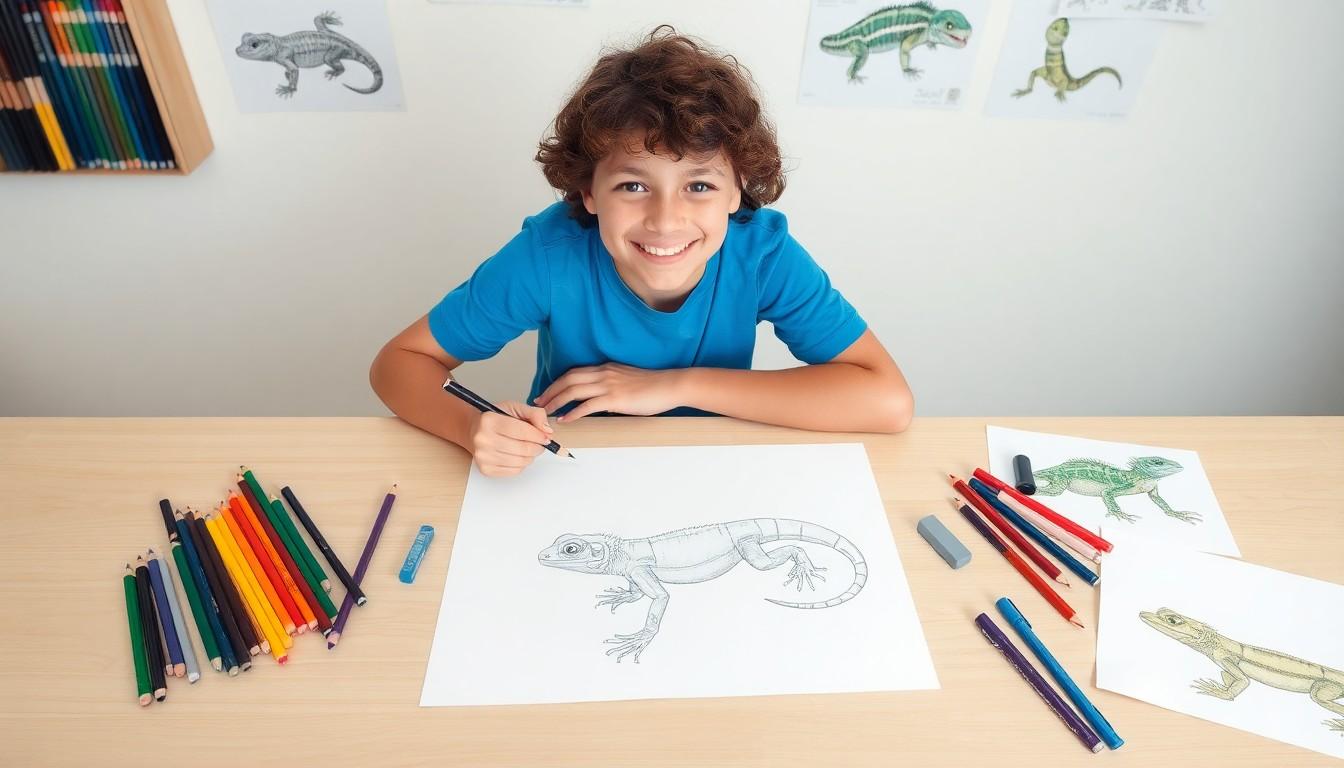
Drawing a lizard might sound like a task for a professional artist, but it’s actually easier than it looks. With a little guidance, anyone can create a charming reptilian masterpiece that’ll impress friends and family. Whether you’re a seasoned doodler or just starting out, lizards offer a fun and quirky subject that’s sure to spark creativity.
Overview of Lizard Easy Drawing
Drawing a lizard appears daunting but is achievable with simple steps. While some may view lizards as complex creatures, breaking the process into manageable parts simplifies the task. First, sketch basic shapes to form the body and tail. Then, gradually add details to enhance the drawing’s accuracy.
Beginners appreciate the guidance provided in tutorials. Specific techniques, like using geometric shapes for the head and body, create a foundation for the drawing. Many artists prefer using reference images to grasp proportions and features. This method bolsters confidence and encourages experimentation.
Experienced artists also enjoy lizard drawings for their variety. Each species comes with unique characteristics to explore, such as patterns and colors. Attention to detail sets their work apart and brings lizards to life on paper.
Various styles are suited for lizard illustration, ranging from cartoonish designs to realistic portrayals. Personalization occurs when artists choose a style that resonates with them. Incorporating elements like shading adds depth and dimension to the final piece.
By practicing regularly, individuals improve their drawing skills over time. Setting aside time for sketching sessions fosters creativity and encourages growth. Not only does this approach apply to lizards, but also to other subjects, making it a valuable skill.
Materials Needed for Lizard Drawing

Drawing a lizard requires specific materials to achieve the best results. Selecting the right tools enhances the creative process.
Types of Paper
Various paper types suit lizard drawing. Smooth paper works well for detailed work and prevents smudging. Textured paper adds dimension, lending a unique characteristic to illustrations. For beginners, sketch paper offers durability and ease in erasing mistakes. Additionally, watercolor paper provides a sturdy option for mixed media techniques. Choose based on the desired style and medium.
Recommended Pencils and Erasers
Using the right pencils and erasers directly impacts the drawing quality. Graphite pencils deliver a range of tones essential for shading. A set of pencils, including HB, 2B, and 4B, offers flexibility and variation. Artists benefit from kneaded erasers, which lift graphite without damaging the paper. Traditional vinyl erasers also work well for precise corrections. Invest in quality tools to facilitate a smoother drawing experience.
Step-by-Step Guide to Lizard Easy Drawing
Drawing a lizard can be enjoyable and straightforward. Following specific steps simplifies the process, making it accessible for everyone.
Basic Shapes and Proportions
Start with basic shapes to form the lizard’s body. Use an oval for the body and a smaller circle for the head. Extend lines to create the tail and limbs. Adjust the size and position to achieve accurate proportions. Focus on the relationship between these shapes as they build the lizard’s structure. Maintain balance and fluidity in the shapes, emphasizing the natural curves of the lizard. Reference images aid in understanding the unique features of various lizard species, ensuring accuracy in the initial sketch.
Adding Details and Textures
Incorporate details to enhance the lizard illustration. Start by outlining the head’s shape and defining the limbs. Add scales or skin texture with small, curved lines. Vary the line thickness to create depth and interest. Capture the lizard’s unique characteristics by paying attention to colors and patterns. Eyes can be emphasized for impact, making them larger or more colorful. Additional elements like a habitat or background can enrich the overall drawing, providing context. Regular practice with these techniques builds confidence and skill in creating detailed lizard drawings.
Tips for Enhancing Your Lizard Drawing
Focusing on detail and technique enhances a lizard drawing significantly. Mastering specific methods helps artists of all levels create impressive illustrations.
Shading Techniques
Applying shading techniques adds depth and dimension to a lizard drawing. Artists can utilize cross-hatching for texture and contour. Using a range of graphite pencils enables subtle gradations, emphasizing the lizard’s form. Blending techniques make transitions smoother, enhancing areas like the legs and tail. In particular, shading along the curves of the body creates a three-dimensional effect. Incorporating highlights on the scales mimics natural light, increasing realism. Practicing these techniques consistently improves overall drawing skills.
Color Choices for Realism
Selecting appropriate colors brings lizard illustrations to life. Observing real lizards provides insight into their natural color palettes. Artists should consider using a mix of greens, browns, and yellows based on the species. Layering colors enhances vibrancy and depth. Utilizing colored pencils or watercolors allows for smooth blending of shades, mimicking realistic skin tones. Applying lighter shades on the lizard’s underside helps create a sense of light exposure. Including surrounding foliage in complementary colors increases the drawing’s overall appeal.
Drawing lizards can be a rewarding and enjoyable experience for artists of all skill levels. By following the outlined steps and utilizing the right materials, anyone can create impressive lizard illustrations. Regular practice not only hones drawing skills but also fosters creativity across various subjects.
With the right techniques and attention to detail, artists can bring their lizard drawings to life. Whether opting for a cartoonish style or a realistic portrayal, the journey of exploring different lizard species offers endless inspiration. Embracing this art form opens the door to a world of creativity and self-expression.

